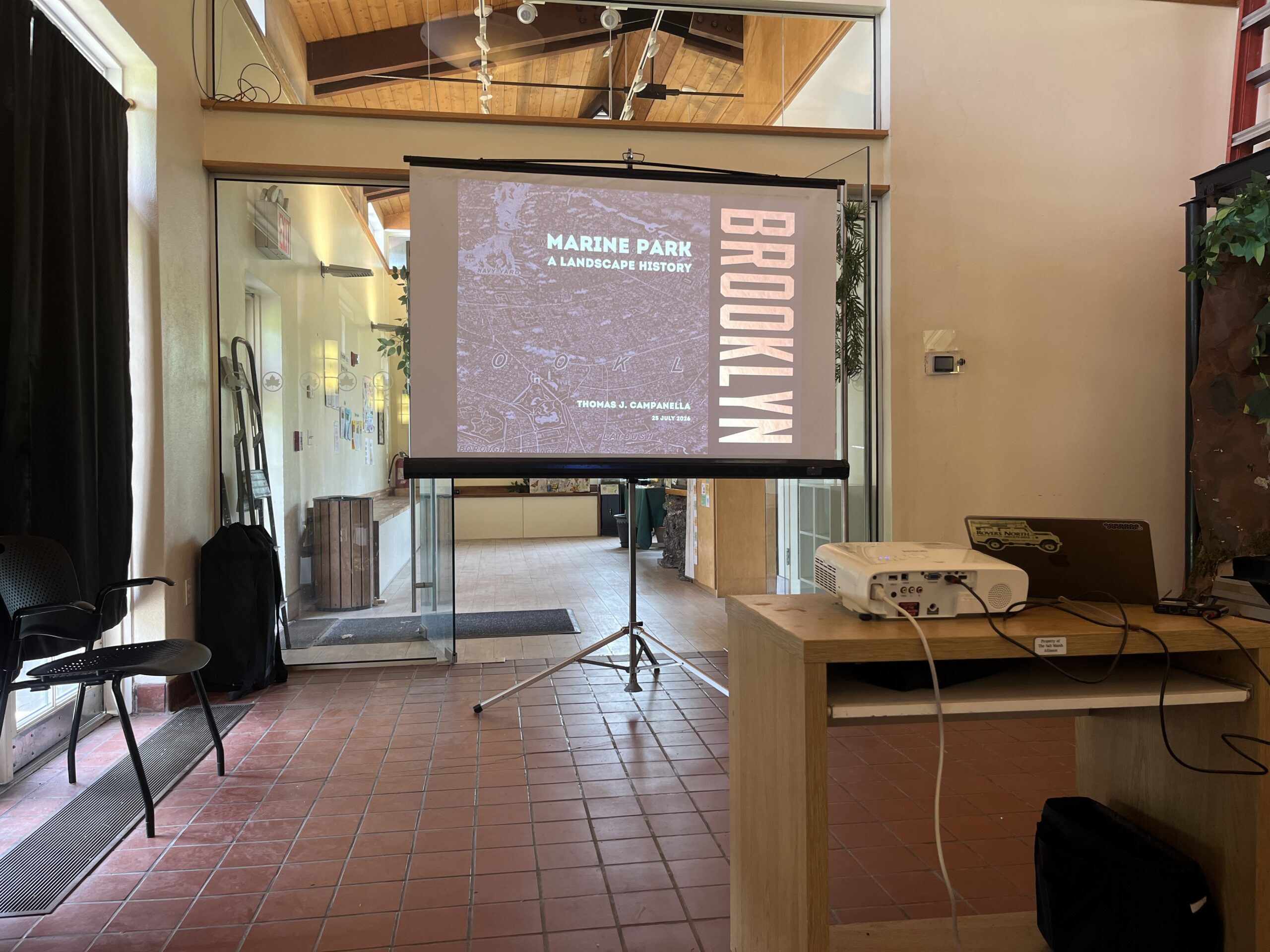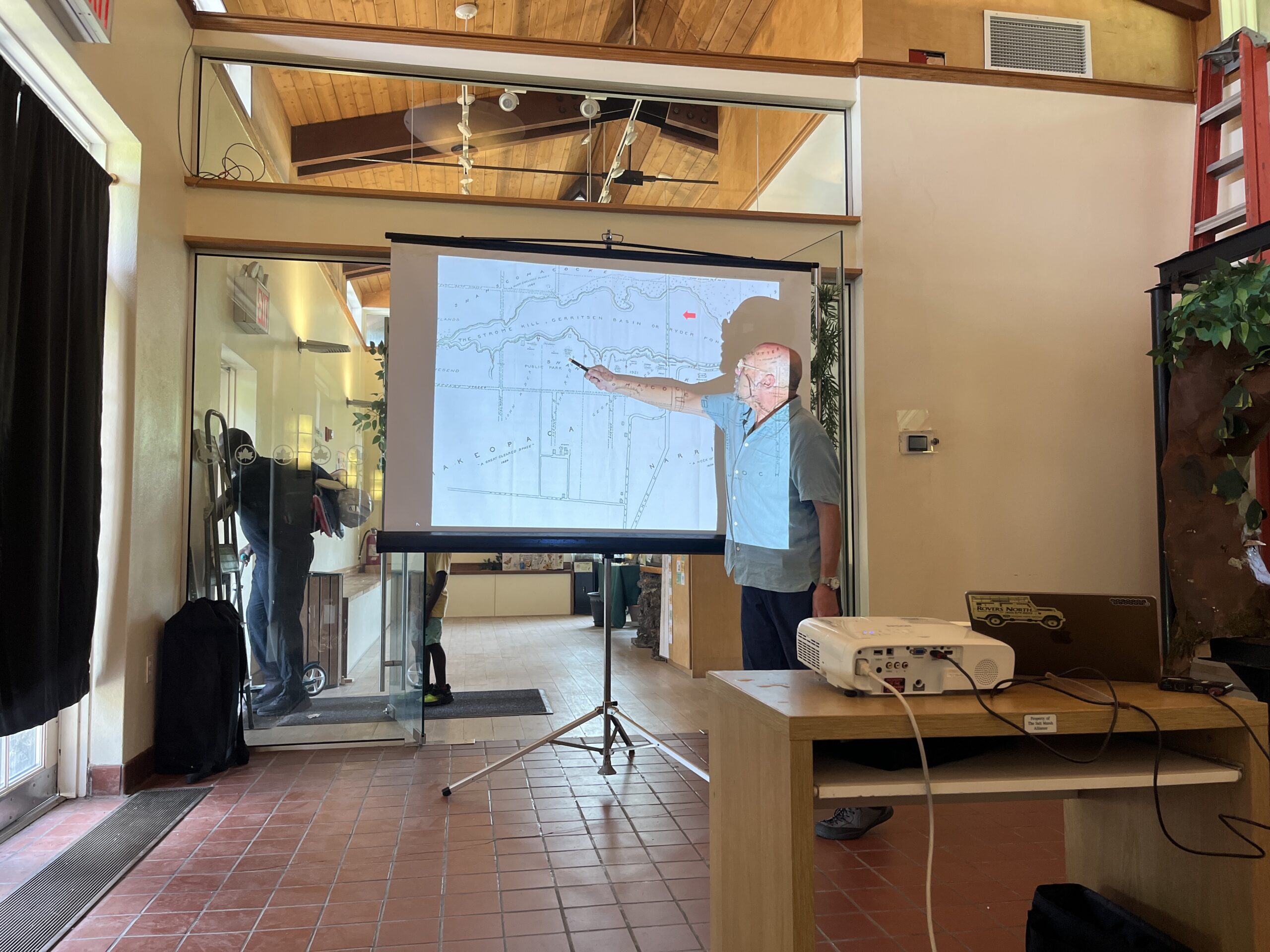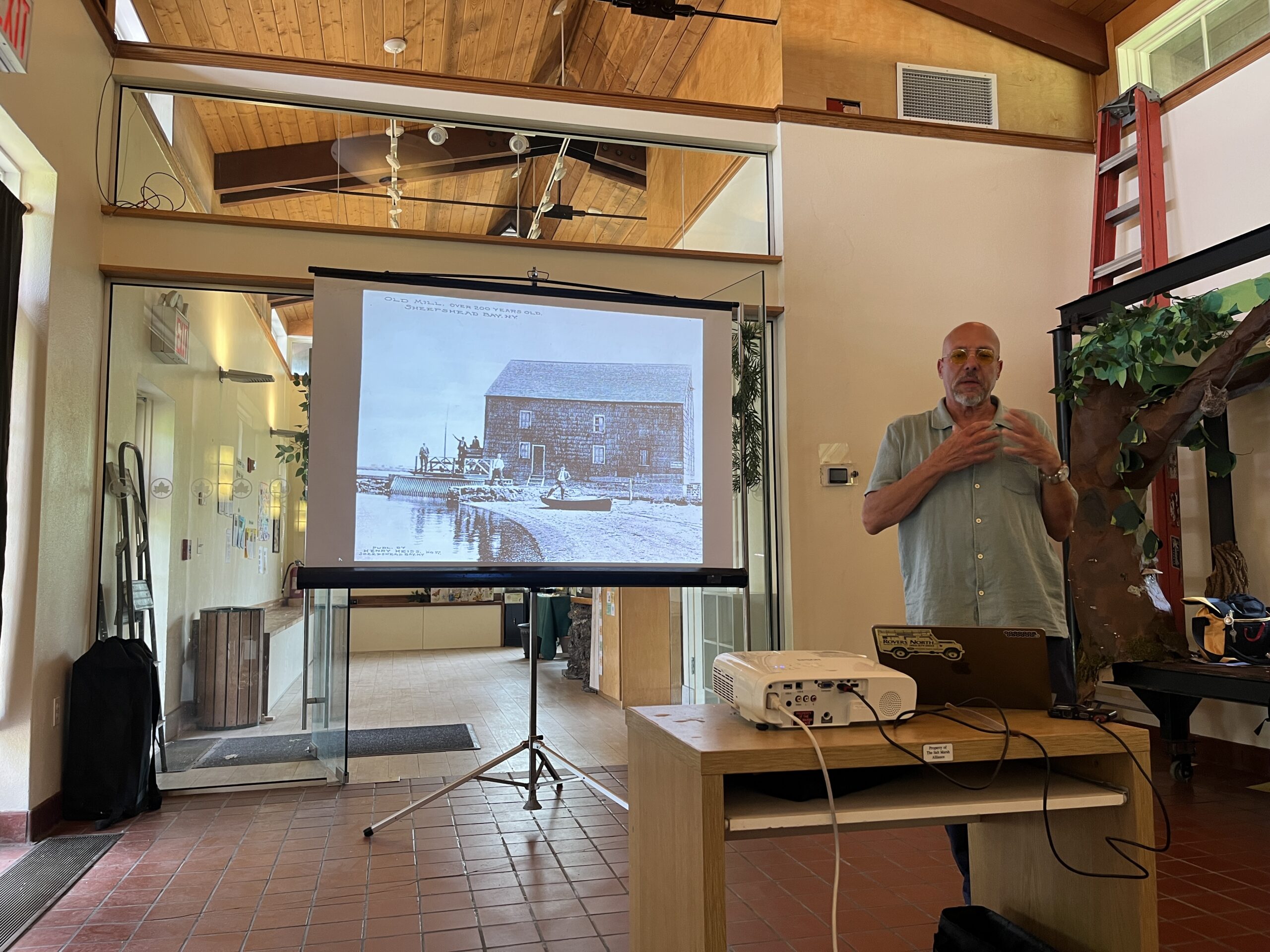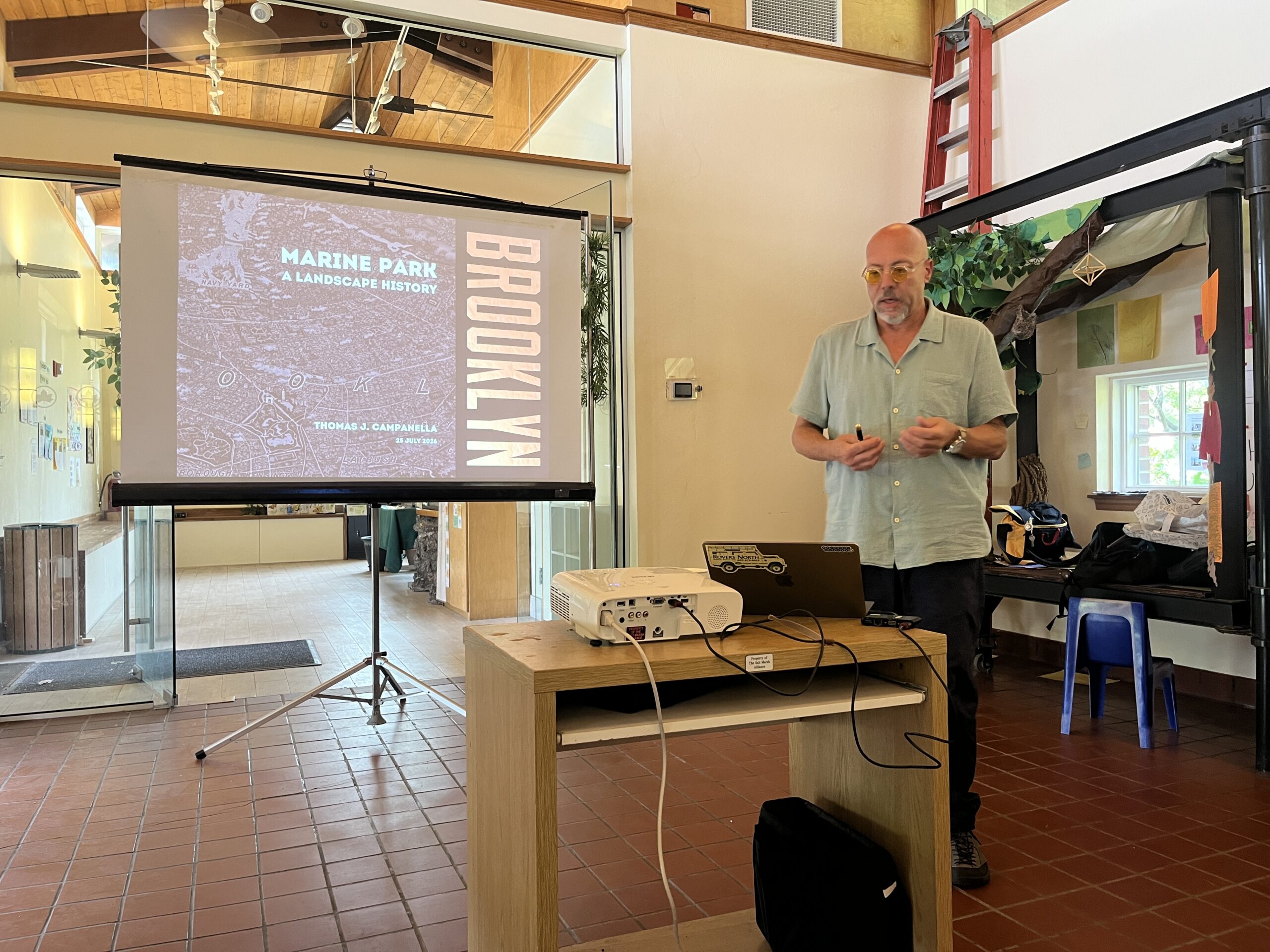
What do a 125,000-seat football stadium, neoclassical boathouse and major shipping port all have in common? They were all once planned to be built in Marine Park, before the neighborhood and salt marsh became what they are today.
This history and more was shared at the “Celebrate Marine Park’s History” lecture, hosted by the Salt Marsh Alliance at the Salt Marsh Nature Center, at 3301 Avenue U, on City of Water Day (Saturday, July 25th).
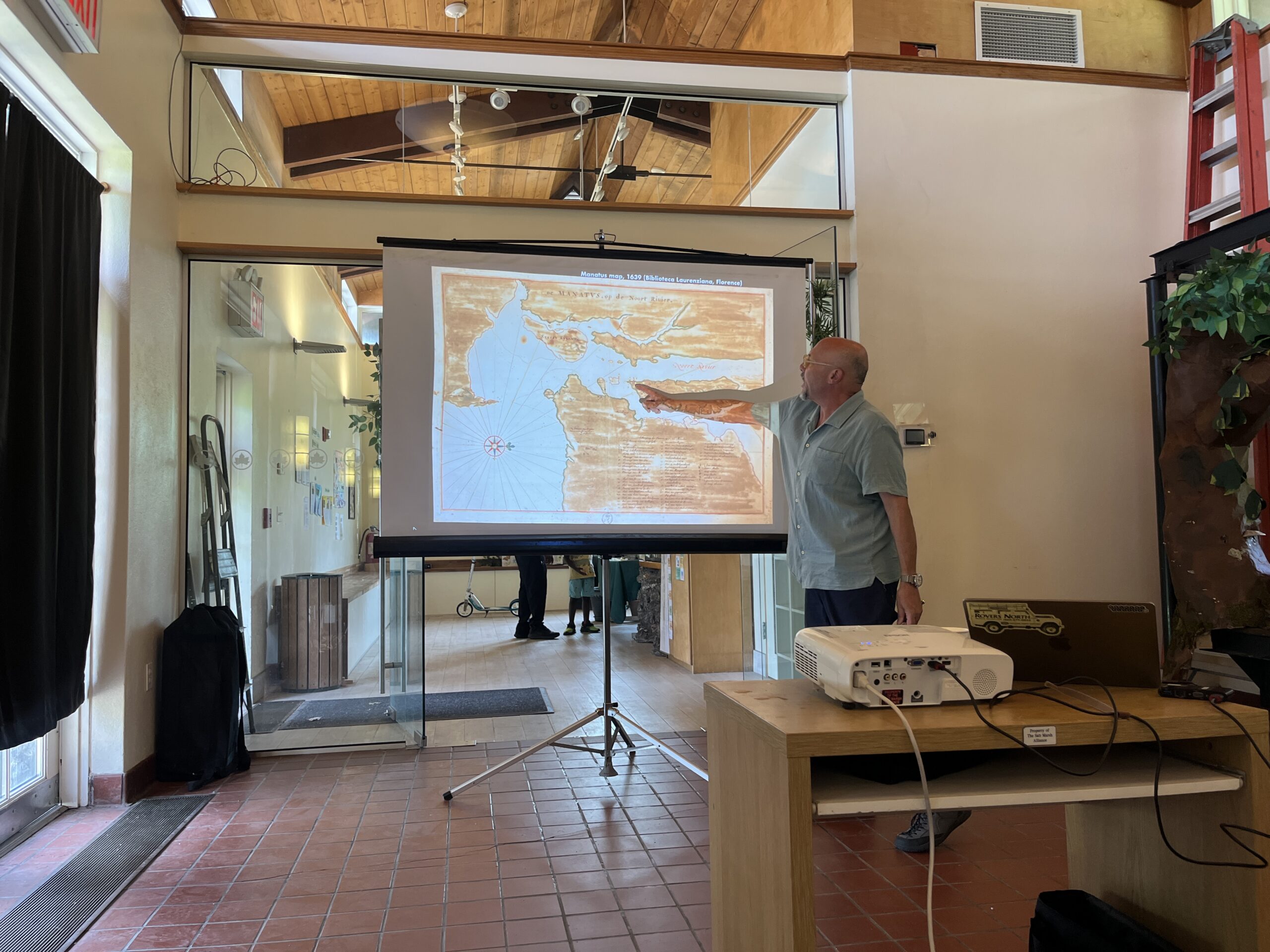
NYC Parks Department historian-in-residence and Marine Park native Thomas Campanella recounted the coastal community’s history from the Mesolithic era when the Laurentide ice sheet was retreating all the way to present day.
“You look out here at the park and it strikes you as a largely natural place and it is, more so than when I was growing up here, but it’s also a cultural landscape and it’s changed dramatically over the centuries,” Campanella said at the outset of his lesson. “In fact, the history here is extraordinarily rich and deep and long.”
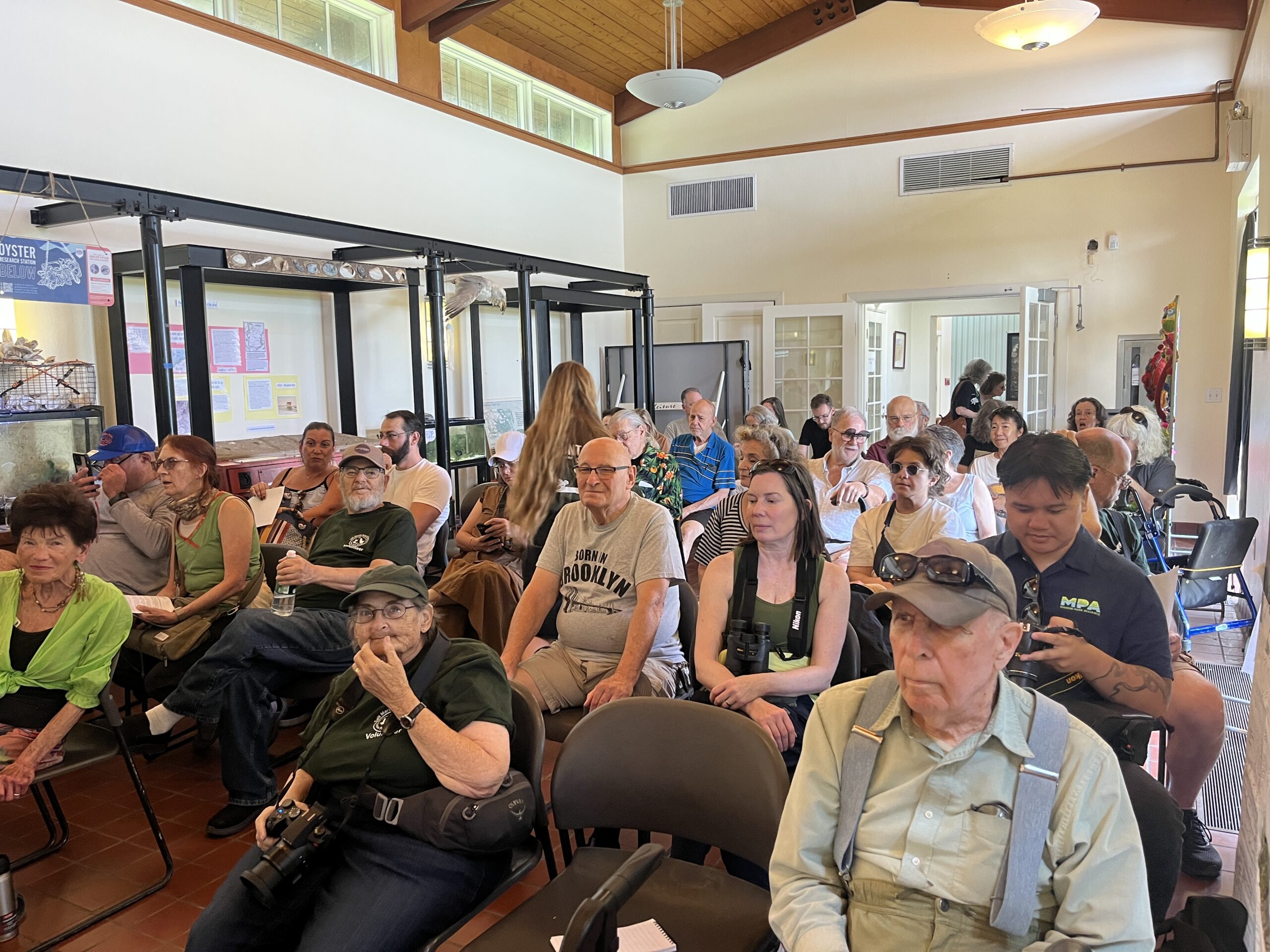
The lecture packed the main hall of the center, with locals, history buffs and nature enthusiasts alike filling the seats, leaving standing room only.
As Campanella explained, the landscape of the city was shaped by the melting and retreating of glaciers 10,000 years ago. The Lenape, an Algonquian-speaking indigenous tribe, lived in the area well before colonization, though originally only relied on Brooklyn as a summer home.
Once the Dutch settled the area in the early 1600s, they began to trade with the Lenape, leading them to live in the area year-round.
By the mid-1600s, the British claimed New York, but remnants of the Dutch still remain in the area, including wooden posts scattered in the salt marsh waters from the Dutch tidal mill and dam that once presided over the waves.
Into the 1800s, the area was still undeveloped, with a smattering of farms and homes. In the early 1900s, city planners started mapping out streets and a park for the area. One planner wanted to host a massive Washington Bicentennial Celebration larger than the Columbian Exposition in Marine Park. Another architect wanted to create a mammoth neoclassical landscaped park along the water, including a football stadium twice the size of Yankee Stadium and a yacht harbor. Neither happened.
By the mid-1900s, influential planner Robert Moses did create a park here but left the salt marsh natural and undeveloped. The Parks Department has led a series of restoration projects to improve the health of the marsh in the modern day.
Campanella is the author of Brooklyn: The Once and Future City and a Cornell University professor.