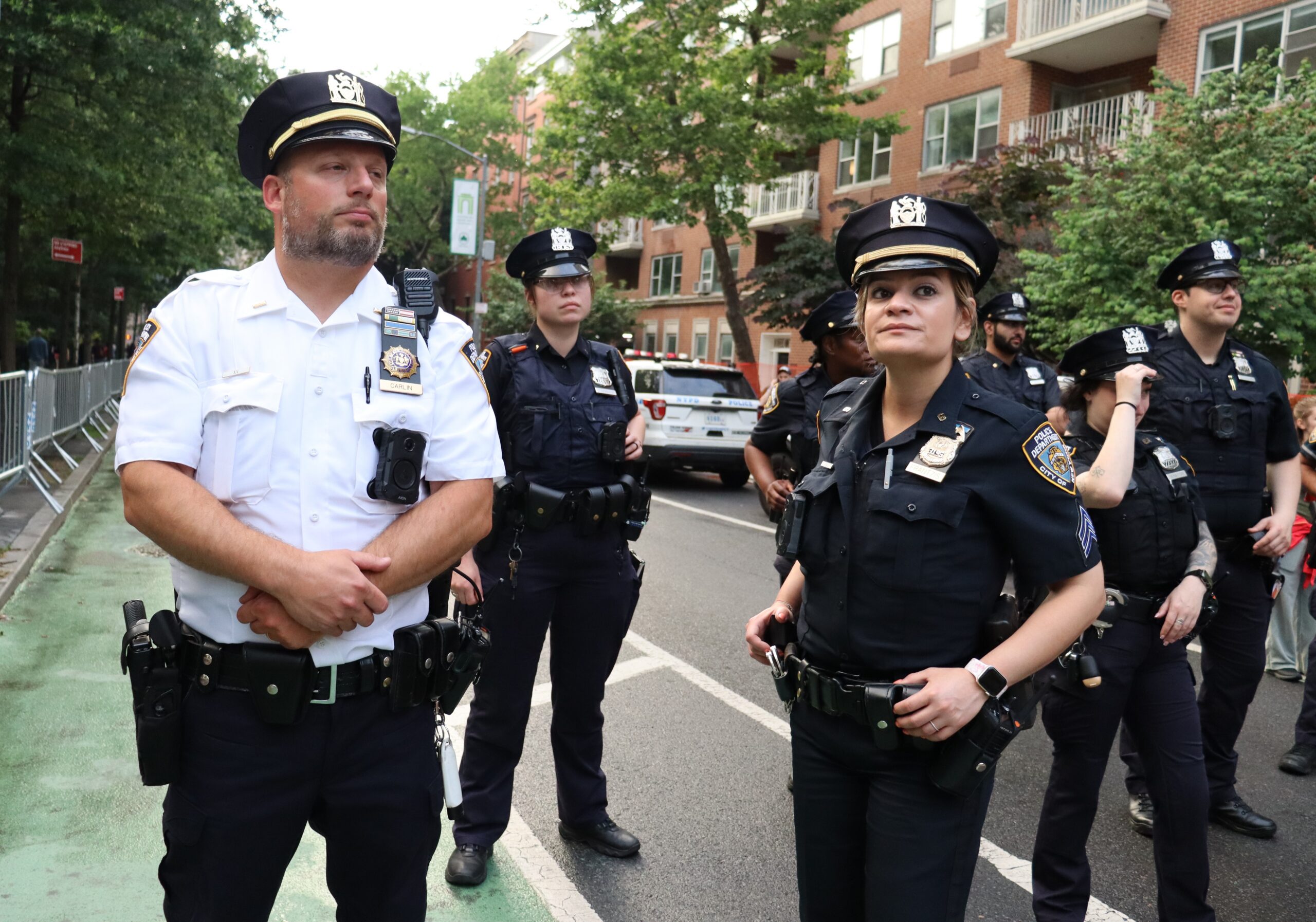
Mayor Zohran Mamdani and Police Commissioner Jessica Tisch announced on November 16th the disbanding of the NYPD’s Strategic Response Group (SRG), fulfilling a key campaign promise to separate protest response from counterterrorism.
This overhaul will transform how the City prepares for and responds to protests, placing communication, de-escalation and civilian coordination at the center of our approach, while protecting New Yorkers’ constitutional right to protest.
The reforms — the development of which began in January — establish a first-of-its-kind, civilian-led Community Dialogue and De-escalation Division (CDDD) within the Mayor’s Office of Community Safety and improve the NYPD’s protest response through a specialized dialogue team, the First Amendment Support Team (FAST), within the department’s Community Affairs Bureau. The two teams will work in close coordination to prepare for and respond to First Amendment activities.
The CDDD will not have weapons or arrest powers. FAST will consist of 30 uniformed officers trained in communication and de-escalation. The NYPD will also establish a new Patrol Support Division (PSD), a unit within the NYPD’s Patrol Services Bureau, with vetted officers who will spend most of their time on patrol-related duties and receive specialized crowd management training to support responses to demonstrations.
The reforms also establish significant new restrictions on the tactics and weapons all officers can use during First Amendment activities, including a formal prohibition on kettling, long guns and tear gas. Pepper spray will not be used as a crowd-management tool, and long-range acoustic devices will be limited to 90 decibels. Officers will also be prohibited from using bicycles as weapons except when necessary to prevent death or physical injury to themselves or another person.
Under the new structure, the SRG’s counterterrorism functions, including heavy weapons deployments at critical infrastructure, will be consolidated within the NYPD’s Intelligence and Counterterrorism Bureau, ensuring that the City’s response to First Amendment activity and counterterrorism operations are entirely separate.
“During our campaign, I promised New Yorkers that we would disband the Strategic Response Group and separate counterterrorism from protest response, and today we are delivering on that promise,” Mamdani said. “New Yorkers exercising their constitutional right to protest should not be met with the same police response as a terrorism threat. We are establishing a new, civilian-led approach that prioritizes dialogue, engagement and de-escalation. These reforms accomplish the key changes called for by Councilmember Chi Ossé’s CURB Act — a bill I am proud to support. Protecting New Yorkers’ rights and keeping our communities safe go hand in hand.”
“Today, we announced a new structure designed to consolidate our counterterrorism capabilities, provide greater support to our patrol officers and ensure we continue to respond to protests consistent with public safety and the First Amendment,” Tisch said. “I believe strongly that the NYPD must always be willing to examine how we operate and make improvements. I would never support changes that diminish the NYPD’s ability to protect New Yorkers or that put our officers in a position where they lack the resources necessary to confront a serious threat. These changes will make us a stronger, more effective department. I thank the men and women of the NYPD for their noble service to this city.”
Together, these changes will help ensure that New Yorkers who exercise their First Amendment rights are met with clear communication and de-escalation.
The new strategy includes the following measures:
- Establishes a civilian-led dialogue unit: Creates the CDDD within the Mayor’s Office of Community Safety to plan for and respond to protests in coordination with the NYPD’s FAST team.
- Creates the NYPD’s first dialogue team: Establishes FAST, a team of 30 uniformed officers within the Community Affairs Bureau with specialized training in communication and de-escalation and coordination with crowd-management personnel. FAST will handle dialogue and de-escalation while CDDD is being built.
- Creates new patrol unit: Establishes the Patrol Support Division, which reports to the Patrol Services Bureau and will comprise vetted officers who will receive specialized training and conduct arrests at protests in rare instances, if necessary. PSD will work with CDDD and FAST when responding to First Amendment activities, building on the reforms agreed to in the Payne protest settlement. For the vast majority of the time, PSD will serve as a resource to patrol, including participating in searches for missing persons, supporting major events, such as the NYC Marathon and Thanksgiving Day Parade, and assisting with priority traffic posts during hazardous weather. There will be strict eligibility requirements to enter the PSD.
- Regulates aggressive crowd-management tactics: Codifies the ban on kettling, prohibits the use of long guns and tear gas during First Amendment activities and limits long-range acoustic devices to 90 decibels. Pepper spray will not be used as a general crowd-management device.
- These reforms will be implemented at no additional cost and without increasing or reducing NYPD headcount.
Courtesy of Mayor Mamdani’s Office
Photo: Elvert Barnes, Flickr